Camp craft
Make a wooden tarp peg
Practise making a light-duty guyline anchor for reasonably firm soil, with a smooth cord contact point.
Know your materials. Make something useful.
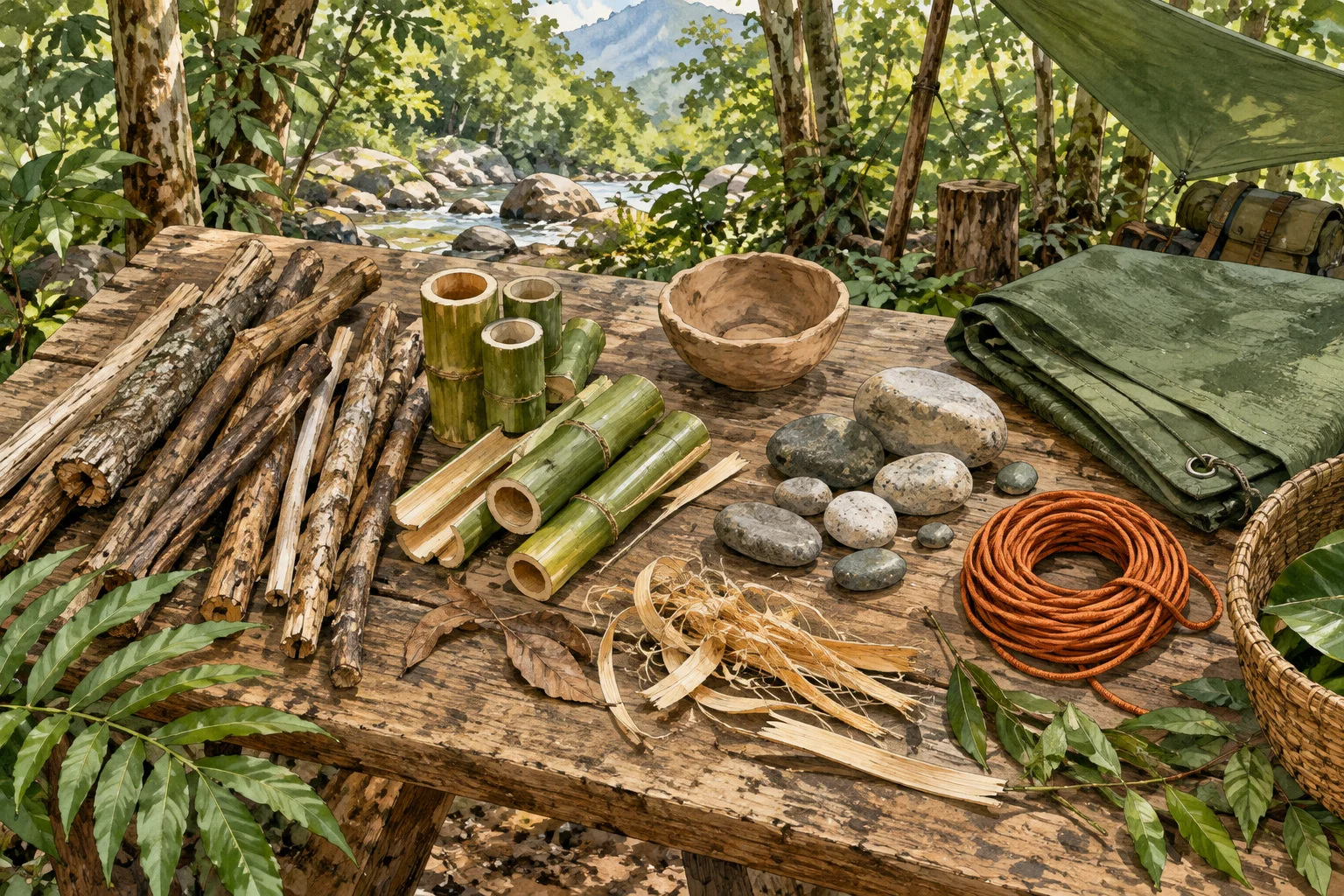
35 illustrated camping craft guides using wood, stone, earth and cord. Materials, step-by-step diagrams, checks and cleanup for every project.
35 / 35 guides
Practise making a light-duty guyline anchor for reasonably firm soil, with a smooth cord contact point.
A low, braced rail for towels and small items, keeping the camp corner organised.
A low tripod with the hanging load kept inside its triangular footprint.
Two smooth strips and a spacer make a simple practice tool for handling dry materials.
Keep a bamboo node as the floor of a container for cord and small accessories.
Use a stable rock and abrasion protection where a stake cannot be driven.
Rounded rocks, padding and a folded edge can hold a groundsheet in light wind.
Arrange three contact points for a container at ground level, without fire or heat.
Compare texture, shape and stability without using fire as a test.
Practise shaping a blunt wedge and shallow digging in prepared soil.
An introductory feel-and-ribbon exercise, not a safety or engineering-strength test.
A decorative pinch-pot exercise exploring wall thickness and drying shrinkage.
Make small test blocks to observe cracking, not structural bricks.
Finish a small digging exercise by replacing soil and removing every introduced item.
Practise an overhand knot, a clove hitch for starting lashings, and a round turn with two half hitches for light items.
Practise a square lashing for low rails and racks using similar-sized poles.
Weave three poles together with enough flexibility for the legs to spread.
Practise reverse wrapping with prepared clean coir or known-source bast fibre.
Folded cord and a small gear clip make a light-duty hanger on a stable rail.
Practise a sloping daytime canopy in calm weather using a tarp and manufactured guylines.
Weave a prepared-leaf sample to explore sun direction and overlapping material.
Explore bottom-to-top overlap on a small sloping sample, then test its drainage.
Use ground separation, sealed bags and overhead cover together to reduce splashes.
Keep a lined bin handy while cooking, then close and store it as the campsite requires.
A low open rack with a clean liner keeps washed dishes off raw wood.
Support a small tap container on a low base, with soap and a wastewater tray.
Direct runoff into a labelled container for non-food-contact tasks, separate from drinking water.
Compare cloudiness before and after filtering. This is not a drinking-water device.
Practise a light-duty friction slider and test it with the actual cord before use.
An improvised external splint when a repair sleeve is unavailable, followed by proper replacement.
Gather sound fabric over a rounded padded object for a temporary low-tension attachment.
A side-by-side repair for a light, blunt brush only.
Raise a light bag on a low improvised base and add a dry bag for protection.
รับพัฒนาเว็บไซต์ แอปพลิเคชัน ระบบจัดการข้อมูล โปรแกรมออฟฟิศ CRM ERP ราคาเป็นมิตร